


Bone Marrow Transplant
For patients with aggressive or relapsed blood cancers, a bone marrow transplant can be the turning point — the treatment that standard chemotherapy alone cannot offer. At Bharati Hospital, our dedicated BMT and Stem Cell Harvest Unit has been built around one goal: giving patients with the most difficult blood cancers a genuine chance at long-term remission, with the right team supporting them every step of the way.
OVERVIEW
A bone marrow transplant is not a routine procedure. It requires a highly controlled environment, a skilled multidisciplinary team, and a level of post-transplant care that very few centres are equipped to provide. Our BMT unit, housed exclusively on the 5th floor — away from general inpatient and outpatient areas — is designed precisely for this purpose.
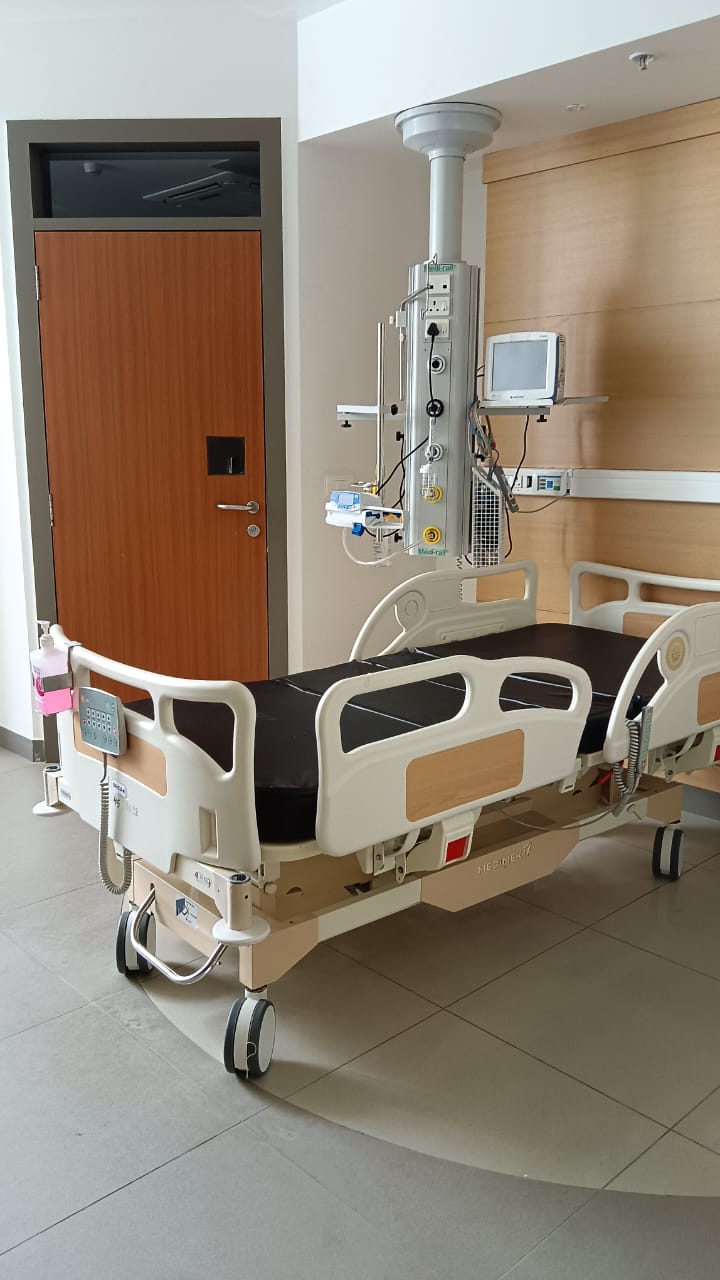
The unit is a 5-bedded, self-contained facility that maintains strict sterility standards critical for transplant patients, whose immune systems are significantly compromised during and after the procedure. Both adult and paediatric patients are treated here, with care protocols tailored to each group.
To date, the unit has successfully completed around 9 bone marrow transplants across a range of diagnoses — a number that continues to grow as the programme matures.
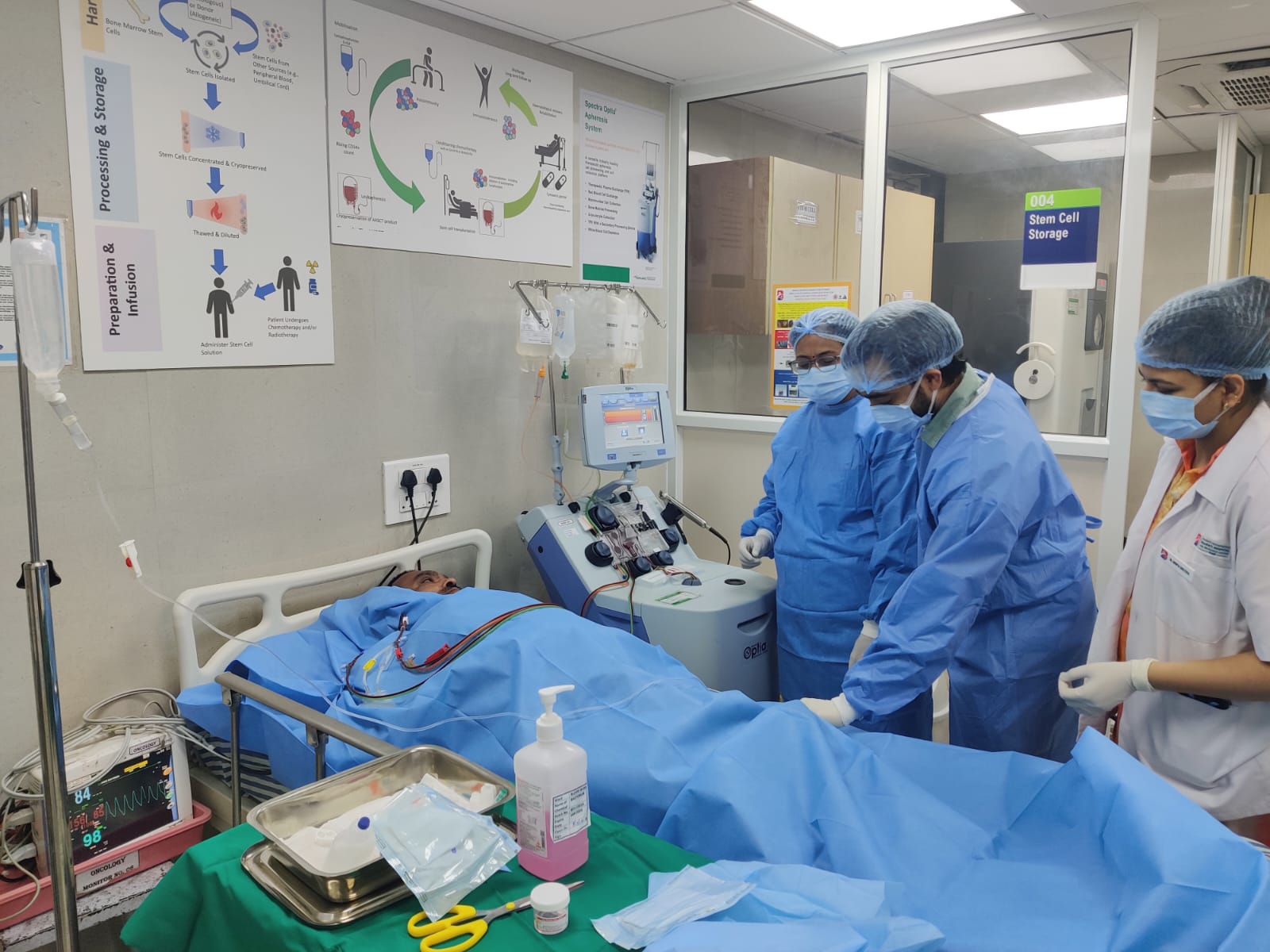
Scope of Services
Transplant types performed
- Autologous BMT — using the patient's own stem cells, collected and reinfused after high-dose chemotherapy
- Allogeneic BMT — using stem cells from a matched related donor
- Haploidentical BMT — using a 50% matched family member as donor, expanding options for patients without a fully matched donor
Conditions treated with BMT
- Acute Leukaemias — AML and ALL (relapsed or high-risk)
- Chronic Leukaemias — CML and CLL
- Hodgkin's and Non-Hodgkin's Lymphoma
- Multiple Myeloma
- Myelodysplastic Syndromes (MDS)
- Aplastic Anaemia
- Thalassaemia and other hereditary blood disorders
Stem cell services
- Peripheral blood stem cell harvesting
- Bone marrow harvest
- Stem cell cryopreservation and storage
- Donor workup and HLA typing
Supportive care during transplant
- Conditioning regimen administration (chemotherapy prior to transplant)
- Barrier nursing and strict infection control protocols
- Neutropenic sepsis monitoring and management
- Transfusion support — red cells, platelets, and blood components
- Nutritional support and symptom management
- Post-transplant monitoring for graft-versus-host disease (GvHD) and other complications
Technology & Facilities
- Dedicated 5-bedded BMT unit on the 5th floor — physically isolated from general hospital wards to minimise infection risk
- HEPA-filtered, positive pressure room environment suitable for severely immunocompromised patients
- In-house stem cell harvesting and cryopreservation — critical for storing cells for autologous transplants
- HLA typing and donor matching capability — accommodating fully matched, partially matched, and haploidentical donors
- Department of Transfusion Medicine providing round-the-clock blood component support
- Transplant-trained nursing staff skilled in barrier nursing, central line care, and post-transplant complication recognition
- Coordinated care with haematology, infectious disease, nephrology, and other departments as needed during recovery
BMT Team
Dr. Koustub Shekhar
Consultant
Dr. Madhura Deshpande
Consultant
FAQs
What is a bone marrow transplant and how does it work?
A BMT involves replacing damaged or non-functioning bone marrow with healthy stem cells. Before the transplant, the patient undergoes a conditioning regimen — high-dose chemotherapy, sometimes with radiation — to destroy the diseased marrow. Healthy stem cells are then infused and gradually establish themselves, rebuilding the patient's blood and immune system over weeks to months.
Who is a candidate for a bone marrow transplant?
BMT is typically recommended for patients with relapsed or treatment-resistant blood cancers — leukaemias, lymphomas, myeloma — as well as certain non-cancerous conditions like aplastic anaemia and thalassaemia. Each case is assessed individually, and the decision involves detailed discussion with the patient and family.
What is the difference between autologous and allogeneic transplant?
In an autologous transplant, the patient's own stem cells are collected before chemotherapy and returned afterwards — essentially rescuing the bone marrow after intensive treatment. In an allogeneic transplant, stem cells come from a donor. Allogeneic transplants carry more risk but also offer a potential "graft-versus-tumour" effect, where the donor's immune cells help fight any remaining cancer.
How is a donor selected?
Donors are usually family members — siblings being the most likely to be a close match. Compatibility is determined through HLA (Human Leukocyte Antigen) testing. A full match is ideal, but our team also performs haploidentical transplants using donors who are only 50% matched, which significantly broadens the pool of eligible patients.
How long does the hospital stay last?
On average, patients stay in hospital for around a month. The exact duration depends on the type of transplant, how smoothly the conditioning phase goes, how quickly the new stem cells engraft, and whether any complications arise during recovery.
What complications should patients be aware of?
The most significant risks include infection (due to a severely weakened immune system during engraftment), graft-versus-host disease in allogeneic transplants, organ toxicity from conditioning chemotherapy, and delayed immune recovery. Our team monitors for all of these closely throughout the admission and follow-up period.