


Diabetes Clinic
Diabetes is one of those conditions that quietly affects everything — your kidneys, your eyes, your feet, your heart — often before you feel anything is wrong. The Diabetes Clinic at Bharati Hospital is built around catching those changes early, keeping them in check, and making sure patients understand their condition well enough to stay ahead of it. Good diabetes care isn't just about controlling numbers. It's about building habits, spotting problems before they become serious, and having a team that stays involved for the long run.
OVERVIEW
Most patients who walk into the Diabetes Clinic aren't in crisis — and that's exactly the point. The clinic is designed for regular, proactive care that keeps things from reaching that stage.
Whether you've just been diagnosed or have been managing diabetes for years, the approach here is the same: understand where you are, identify any early signs of complications, and put together a plan that's actually workable for your day-to-day life. The team includes experienced physicians supported by dietitians, trained nursing staff, and access to specialised diagnostic equipment — all under one roof.
The clinic runs every weekday morning at Room No. 5, Medicine OPD, Ground Floor, from 9 am to 1:30 pm. Walk-ins are welcome alongside scheduled appointments.
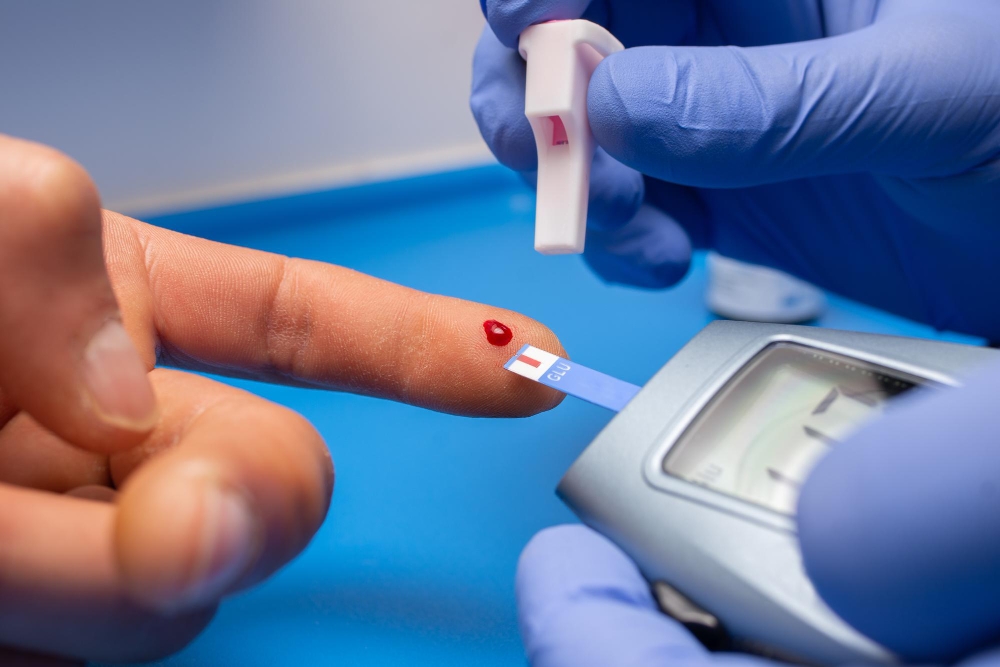
Scope of Services

Routine monitoring & complication screening
- Diet counselling — practical, personalised guidance tailored to each patient's food habits and medical profile
- Annual laboratory check-ups to monitor kidney function and screen for diabetic nephropathy
- Fundus (retinal) examination to track eye health and detect early diabetic changes before vision is affected
- Detailed foot examination to identify pressure abnormalities, nerve damage, and early signs of diabetic foot
- Screening for peripheral arterial disease (PAD) — assessing blood flow to the limbs
- Evaluation for autonomic neuropathy — nerve damage affecting heart rate, blood pressure, and other internal functions
Diabetes screening camps
- Regular community camps covering fasting and post-meal blood sugar, HbA1c, lipid profile, and fundus review
- HbA1c-specific camps for accessible three-month blood sugar average monitoring
- Diabetes Risk Profiler camps — a single-session, multi-system assessment covering several complications at once
Patient education & awareness
- Structured education sessions on self-monitoring, medication adherence, and lifestyle management
- Special programmes on World Diabetes Day and Diabetes Health Week
- Guidance on recognising early warning signs and when to seek urgent review
Technology & Facilities
The clinic uses a dedicated set of diagnostic tools specifically for detecting diabetes-related complications — many of which cause no symptoms in their early stages:
- Diabetes Risk Profiler — a comprehensive, integrated assessment tool evaluating nerve function, circulation, cardiac autonomic activity, and lung health in a single session
- ABI (Ankle-Brachial Index) Machine — measures blood pressure at the ankle and arm to screen for peripheral arterial disease
- Vibroaesthesiometer — tests vibration sensitivity in the feet to pick up early peripheral neuropathy, often before a patient notices any numbness
- Cardiac Autonomic Testing — assesses how diabetes may be affecting heart rate regulation and the autonomic nervous system
- Spirometry — lung function testing, relevant for patients where diabetes intersects with respiratory health
- Harris Mat (Foot Pressure Mapping) — analyses foot pressure distribution to identify abnormal loading patterns that raise the risk of ulceration
- In-house laboratory — HbA1c, lipid profile, kidney function, urine microalbumin, and other essential diabetic markers tested on-site
Diabetes Clinic Team
Dr. Shilpa Sule
Consultant
FAQs
Who should visit the Diabetes Clinic?
Anyone with Type 1 or Type 2 diabetes, pre-diabetes, gestational diabetes, or a strong family history of the condition. Early review is always more useful than waiting for symptoms — complications are far easier to manage when caught before they progress.
How often should I come in?
For most patients, a review every three months is a good baseline — more frequently if blood sugar is unstable, if a new complication is being monitored, or after any significant change in medication. The team will set a schedule suited to your situation.
What is HbA1c and why does it matter more than a single blood sugar reading?
HbA1c reflects your average blood sugar over the past two to three months. A single fasting reading only tells you what your sugar was at one moment — HbA1c gives a much more reliable picture of how well your diabetes is being managed overall. It's one of the most important markers the team tracks at every visit.
What is the Diabetes Risk Profiler?
It's an integrated screening tool that evaluates several potential complications in one sitting — nerve function, blood flow to the limbs, cardiac autonomic health, and lung function. Rather than coming back multiple times for separate tests, patients get a comprehensive picture of how diabetes may be affecting the body beyond blood sugar alone.
My feet feel fine — do I really need a foot examination?
Yes, and this is actually when it matters most. Diabetic neuropathy often develops silently — patients lose sensation gradually without noticing. By the time there's pain or numbness, nerve damage is already significant. Regular foot examinations and pressure mapping catch these changes early, when intervention is still straightforward.
Is diet counselling included in the consultation?
Yes. Dietary guidance is part of the clinic's standard care, not an add-on. Advice is personalised — it takes into account your food preferences, daily routine, medications, and test results, rather than handing out a generic chart.
What happens on World Diabetes Day?
The clinic organises awareness events, screening camps, and education programmes during World Diabetes Day and Diabetes Health Week — open to patients, their families, and the wider community. It's a good opportunity for anyone who hasn't had a diabetes check recently to come in.
Can diabetes complications be reversed?
Some early-stage complications — particularly related to blood sugar control, kidney function, and nerve health — can be slowed significantly or partially reversed with good management. Others, once established, are better managed than reversed. The earlier complications are detected, the more options there are.