


Kidney Transplant
For someone living with end-stage kidney failure, a transplant is not just a treatment option — it's the closest thing to a normal life again. At Bharati Hospital, our Kidney Transplant programme is built around making that outcome a reality — with the surgical expertise, the critical care infrastructure, and the long-term nephrology support that a successful transplant genuinely requires.
OVERVIEW
A kidney transplant involves placing a healthy kidney — from either a living or deceased donor — into the recipient, where it takes over the work of the failed kidneys. It is, for most eligible patients, the best long-term treatment for ESRD — offering better survival, better quality of life, and freedom from the demands of dialysis.
Our programme covers the complete pathway — from the initial transplant evaluation and donor workup, through surgery and ICU recovery, to long-term post-transplant nephrology follow-up. Dialysis services are also available for patients who are awaiting transplant or who need bridging support.
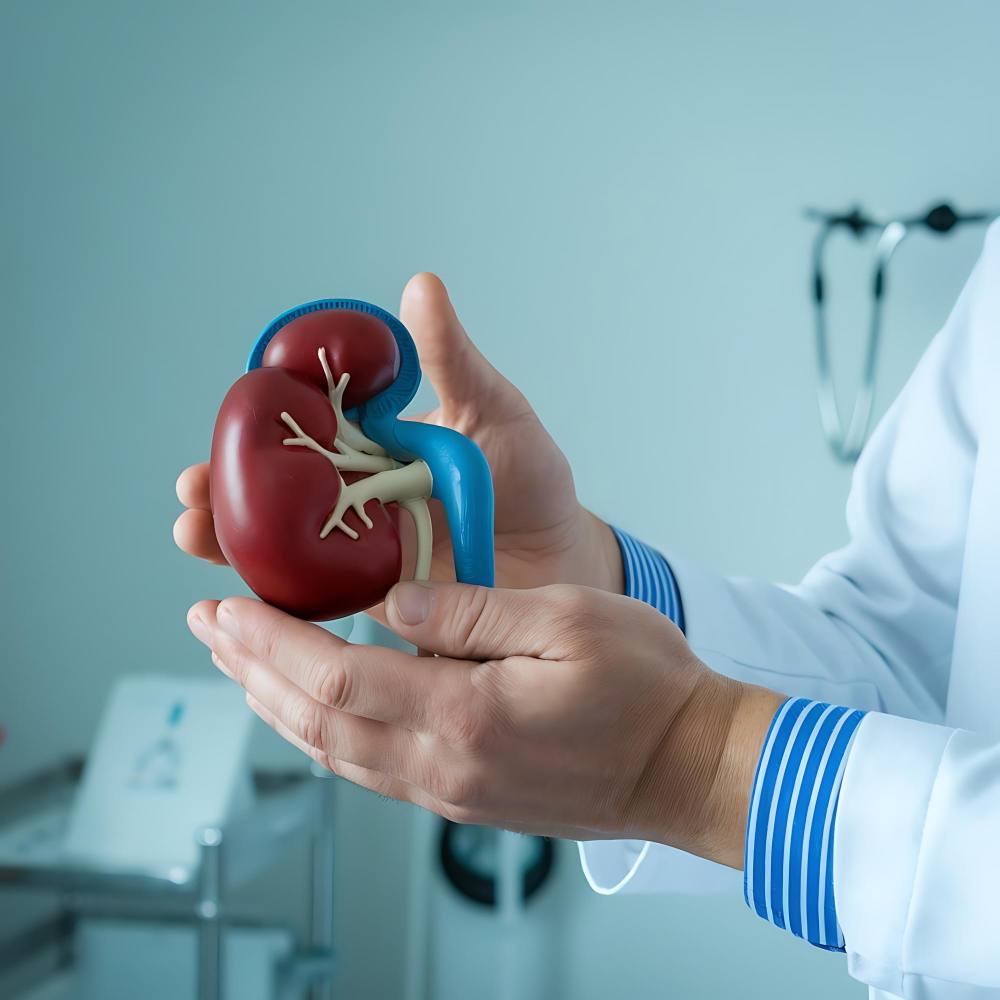
Types of Kidney Transplant
Living donor kidney transplant A healthy kidney is removed from a living donor — typically a family member or close relative — and transplanted into the recipient. Living donor transplants generally have better outcomes than deceased donor transplants: the kidney is healthier, the surgery can be planned rather than rushed, and waiting times are significantly shorter. All living donor transplants are cleared through NOTTO (National Organ and Tissue Transplant Organisation) in line with regulatory requirements.
Deceased donor kidney transplant The kidney is retrieved from a donor who has passed away — either a registered organ donor or someone whose family has consented to donation after death. Deceased donor transplants are a vital part of the programme, though waiting times depend on organ availability and recipient matching through the national allocation system.
ABO-incompatible kidney transplant In certain cases where the blood groups of donor and recipient do not match, transplantation may still be possible. ABO-incompatible transplants require a specific preparation protocol — using immunosuppressive therapy before and after the procedure to reduce the risk of rejection. This approach expands the pool of potential donors for patients who might otherwise have a much longer wait.
Scope of Services
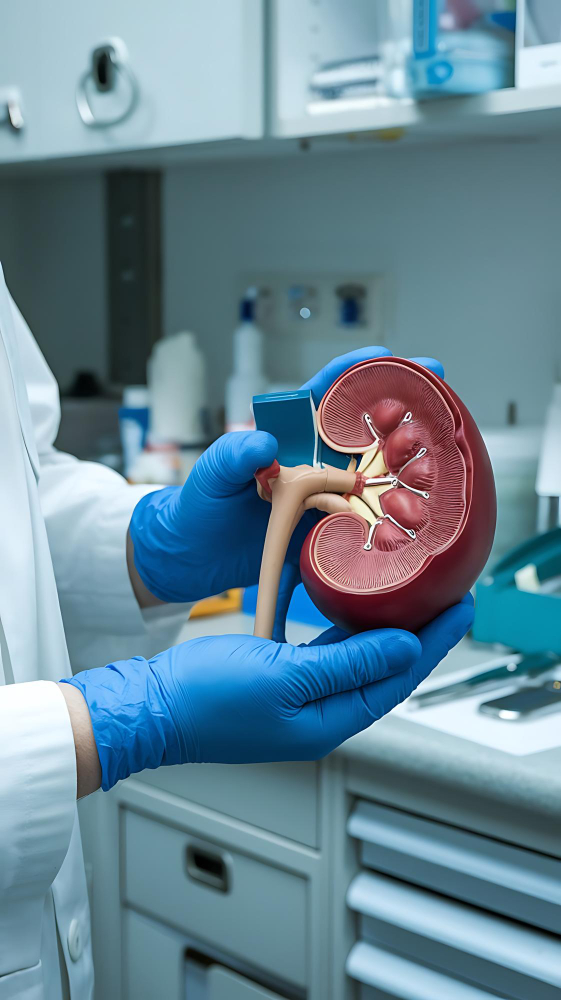
Pre-transplant evaluation
- Comprehensive kidney disease assessment and staging
- Blood group testing and tissue compatibility (crossmatch and HLA typing)
- Donor-recipient matching
- Cardiac evaluation and overall medical fitness assessment
- Psychological and nutritional assessment
- Counselling for patients and their families — addressing what to expect at every stage
Living donor evaluation & surgery
- Medical, surgical, and psychological screening of living donors
- Laparoscopic donor nephrectomy — keyhole removal of the donor kidney, minimising recovery time and postoperative discomfort for the donor
- ABO-compatible and selected ABO-incompatible transplants
Deceased donor transplant services
- Cadaveric kidney transplant — coordinated through the national organ allocation system
- Organ retrieval and preservation coordination
- Emergency transplant readiness — the team is prepared to mobilise at short notice when a deceased donor kidney becomes available
Advanced transplant procedures
- High-risk kidney transplants — including patients with complex medical histories or prior transplant complications
- Repeat kidney transplantation for patients whose previous transplant has failed
- Combined procedures where clinically indicated
Surgical & critical care support
- Advanced modular transplant operation theatres
- Dedicated transplant ICU with specialised post-operative monitoring
- 24/7 anaesthetic and critical care backup
- Structured infection prevention and surveillance protocols during the vulnerable early post-transplant period
Post-transplant care
- Immunosuppressive therapy initiation and long-term management — finding the right balance between preventing rejection and avoiding over-suppression
- Regular rejection surveillance — clinical, biochemical, and imaging-based monitoring
- Infection screening and treatment — transplant recipients are at higher risk, and early detection matters
- Long-term nephrology follow-up to protect and monitor the transplanted kidney
- Dietary and lifestyle counselling — helping patients understand how to look after their new kidney
Dialysis support services
- Haemodialysis — for patients awaiting transplant or requiring bridging support
- Peritoneal dialysis support
- Emergency dialysis when acute intervention is needed
Patient education & financial support
- Medication adherence counselling — immunosuppressive therapy is lifelong, and understanding it is critical to transplant success
- Lifestyle and nutritional guidance tailored to post-transplant requirements
- Donor and recipient counselling throughout the process
- Financial and insurance assistance — our team helps patients navigate government schemes and available support to reduce the cost burden
Technology & Facilities
-
Diagnostics High-resolution ultrasound and Doppler imaging, ECG, echocardiography, portable X-ray, and advanced pathology analysers — all in-house for timely pre and post-transplant assessment. Tissue typing and crossmatch testing is done on-site to avoid delays in compatibility confirmation.
-
Operation Theatres Modular transplant OTs with laminar airflow, laparoscopic systems for minimally invasive donor nephrectomy, advanced anaesthesia workstations, and precision surgical instruments — set up specifically for the demands of transplant surgery.
-
Transplant ICU & Critical Care Dedicated transplant ICU with multi-parameter monitors, mechanical ventilators, CRRT machines for post-operative renal support, and bedside ultrasound — backed by 24/7 anaesthetic and critical care cover.
-
Dialysis Unit Advanced haemodialysis machines with RO water purification, peritoneal dialysis support, and portable machines for flexible care settings — available for patients bridging to transplant or requiring post-operative support.
-
Laboratory & Infection Control Automated biochemistry, haematology, and blood gas analysers. HEPA filtration in transplant and critical care areas, sterilisation systems, and active infection surveillance to protect immunocompromised patients.
-
Support Infrastructure 24/7 blood bank, organ preservation systems, dedicated transplant ICU beds, and an Electronic Medical Records (EMR) system ensuring continuity of care across the entire transplant pathway.
FAQs
Who needs a kidney transplant?
A kidney transplant is recommended for patients with end-stage renal disease — where the kidneys have permanently lost the ability to function adequately. Most patients are already on dialysis or approaching the point where dialysis will be needed. A transplant is considered when the patient is medically suitable and a compatible donor is available.
Is a kidney transplant better than dialysis?
For most eligible patients, yes — in the long term. Dialysis keeps patients alive but is demanding, time-consuming, and associated with significant restrictions. A successful transplant restores near-normal kidney function, frees patients from dialysis, and is associated with better long-term survival and quality of life. That said, not every patient is a transplant candidate, and the decision involves a thorough medical evaluation.
What happens during the pre-transplant evaluation?
The evaluation is comprehensive — it covers your kidney disease history, blood group and tissue compatibility, cardiac fitness, any other medical conditions that could affect surgery or recovery, nutritional status, and psychological readiness. The aim is to ensure that transplant is the right choice, that the timing is appropriate, and that both donor and recipient are as well-prepared as possible.
Can a family member donate a kidney?
Yes. Living donation from a family member is often the preferred option — outcomes are generally better, waiting times are shorter, and the surgery can be planned rather than done urgently. The donor undergoes thorough medical, surgical, and psychological screening before approval. All living donor cases are processed through NOTTO to ensure the process complies with legal and ethical requirements.
What is laparoscopic donor nephrectomy?
It is the keyhole surgical technique used to remove the donor's kidney. Rather than a large open incision, the surgeon works through small ports using a camera and specialised instruments. For the donor, this means less pain, a shorter hospital stay, a faster return to normal activity, and a smaller scar — without any compromise to the quality of the kidney being donated.
What is CRRT and why might it be needed after transplant?
CRRT (Continuous Renal Replacement Therapy) is a form of gentle, continuous dialysis used in the ICU when a patient needs kidney support but cannot tolerate the rapid fluid shifts of standard haemodialysis. After a transplant, some kidneys take a few days to begin working — a phenomenon called delayed graft function. CRRT provides support during this window without stressing the new kidney or the patient's cardiovascular system.
What are the signs of kidney rejection?
Rejection can be subtle — reduced urine output, swelling, weight gain, a rise in creatinine levels, or discomfort over the transplant site. Some episodes of rejection have no symptoms at all and are only detected on routine blood tests, which is why structured post-transplant follow-up is so important. If caught early, many rejection episodes can be successfully treated.
Is financial support available for transplant patients?
Yes. Our team assists patients in identifying applicable government health schemes and financial support options. Patients are encouraged to speak with our support staff early in the process so that financial planning can happen alongside clinical preparation — not as an afterthought.