


Department of Hematology & Blood Disorders
The Department of Hematology and Hemato-Oncology at Bharati Hospital is built around exactly that commitment: specialist-led, evidence-based treatment for the full range of blood disorders, delivered in an environment where patients are genuinely looked after — not just processed. From a straightforward anaemia to a complex blood cancer requiring intensive therapy, the team here is equipped and experienced to manage it all.
OVERVIEW
Hematology sits at an interesting crossroads — it covers conditions as different as inherited anaemias in children and aggressive lymphomas in adults, and everything in between. What they share is the need for precise diagnosis, carefully planned treatment, and a team that stays closely involved through what can be a long and demanding journey.
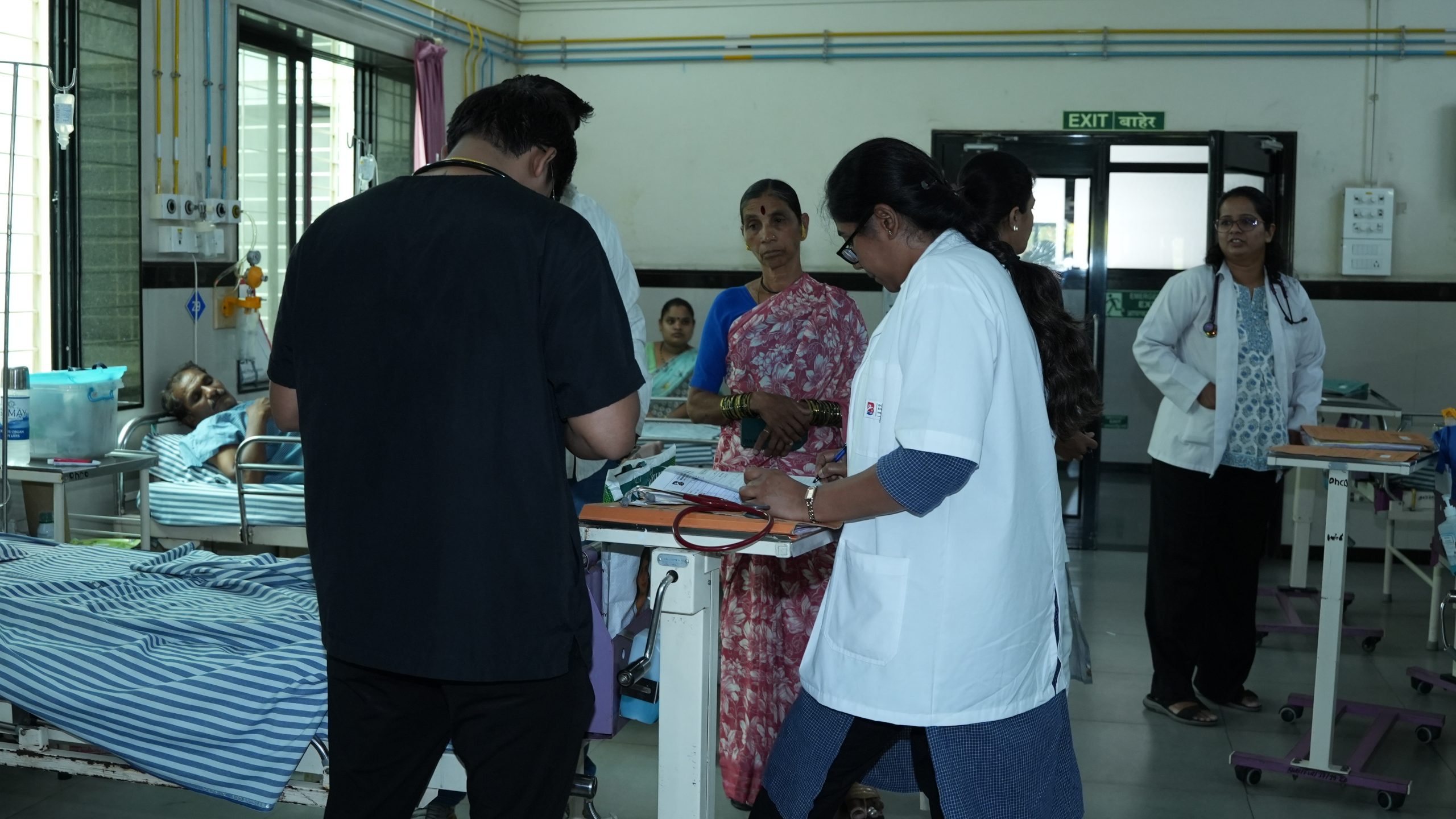
The department is led by two dedicated Clinical Haematologists, supported by a highly trained medical and nursing team. The facilities have been developed to handle both short, ambulatory treatments and extended inpatient care without compromise — a 30-bed daycare unit for patients who need transfusions or quick chemotherapy cycles without admission, and a 40-bed inpatient ward for those who need closer monitoring and intensive management.
For patients who require cellular therapies, the department connects directly with the dedicated Stem Cell and Bone Marrow Transplant Unit — a specialised facility managed as part of the same haematology programme.
Scope of Services
Benign (non-cancerous) blood conditions
- Severe anaemias — including iron deficiency, megaloblastic, haemolytic, and aplastic anaemia
- Thalassaemias — hereditary haemoglobin disorders requiring regular monitoring and transfusion support
- ITP (Immune Thrombocytopenic Purpura) — immune-mediated low platelet counts causing bleeding and bruising
- Coagulation disorders — bleeding conditions such as haemophilia, Von Willebrand disease, and acquired clotting abnormalities
Blood cancers (malignant conditions)
- Leukaemias — acute and chronic, including AML, ALL, CML, and CLL
- Lymphomas — Hodgkin's and Non-Hodgkin's lymphomas at all stages
- Multiple Myeloma — plasma cell cancer requiring specialist management and close monitoring
- Other rare and complex blood cancers — managed with the same level of specialist attention as more common diagnoses
Treatment services
- Blood transfusions — day care and inpatient, supported by a 24/7 blood bank
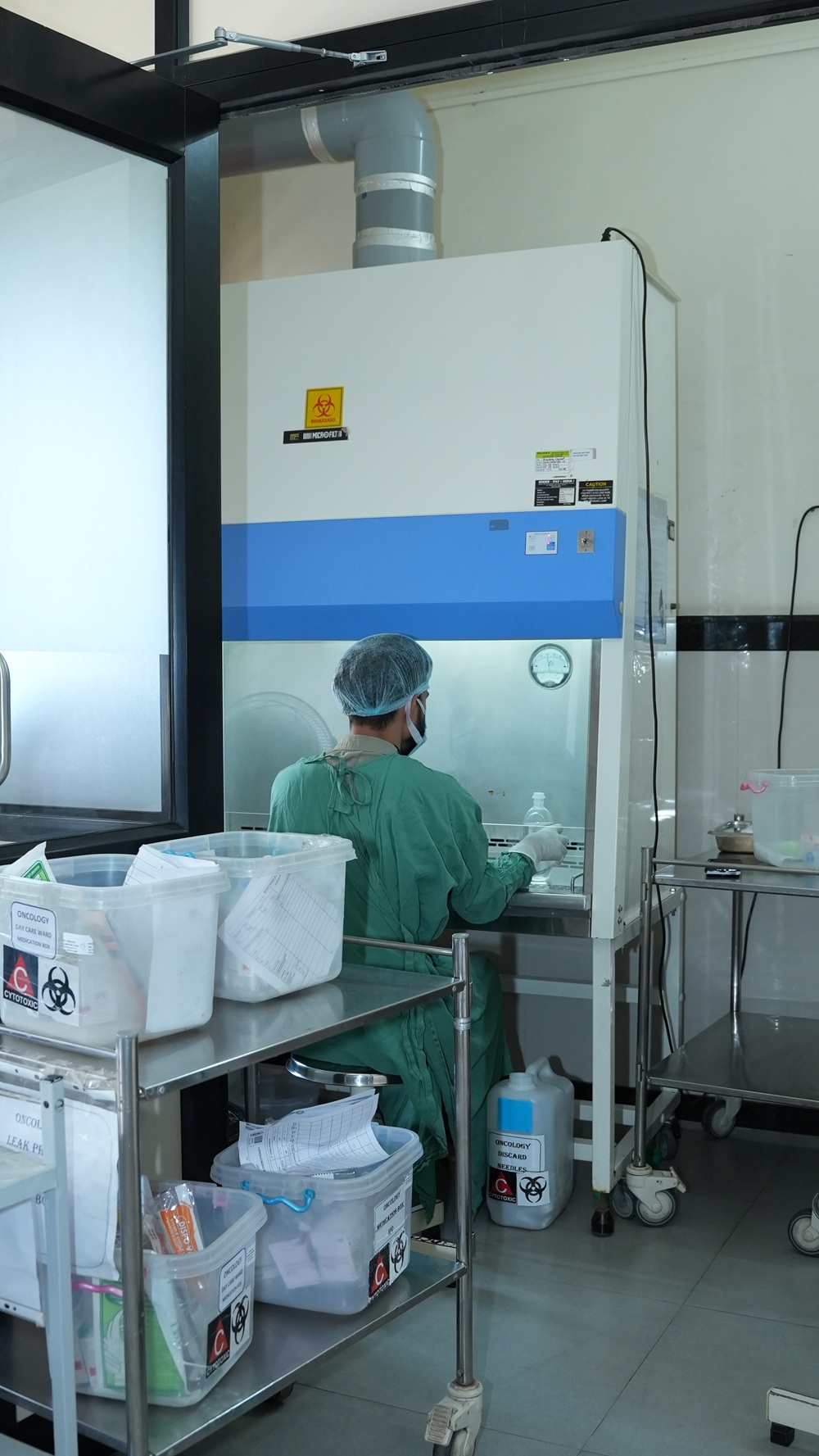
- Chemotherapy — administered by a dedicated, trained nursing team in a controlled environment
- Management of neutropenic sepsis and treatment-related complications
- Bone marrow and stem cell transplantation — through the dedicated BMT unit
- Long-term follow-up and survivorship care after treatment completion
Supportive care during transplant
- Conditioning regimen administration (chemotherapy prior to transplant)
- Barrier nursing and strict infection control protocols
- Neutropenic sepsis monitoring and management
- Transfusion support — red cells, platelets, and blood components
- Nutritional support and symptom management
- Post-transplant monitoring for graft-versus-host disease (GvHD) and other complications
Technology & Facilities
-
30-Bed Daycare Unit Designed for patients who need regular treatments — transfusions, short chemotherapy cycles, or monitoring reviews — without the disruption of a full hospital admission. The unit runs efficiently so patients can get their treatment and get back to their lives with minimal wait.
-
40-Bed Inpatient Ward A dedicated ward for patients who need closer observation, intensive chemotherapy, or recovery from a procedure. The ward is staffed by haematology-trained nurses who understand the specific demands of this patient group — particularly around infection risk and transfusion management.
-
Stem Cell & Bone Marrow Transplant Unit A highly specialised, separately maintained unit for patients undergoing autologous or allogeneic stem cell transplantation. Full details of the BMT programme are available on the dedicated BMT page.
Hematology Team
Dr. Koustub Shekhar
Consultant
Dr. Madhura Deshpande
Consultant
FAQs
What types of blood conditions does the department treat?
The department covers the full spectrum — from common conditions like iron deficiency anaemia and ITP to complex blood cancers including leukaemias, lymphomas, and myeloma. Both non-cancerous and cancerous blood disorders are managed here, across all age groups.
Do I need a referral to visit the Hematology department?
A referral from your general physician or another specialist is helpful and allows the team to review your history before the consultation. However, patients can also present directly if they have been advised to seek a haematology opinion or have an urgent concern.
What is flow cytometry and why does it matter?
Flow cytometry is a laboratory technique that analyses individual cells in detail — identifying what type of cell they are, what markers they carry on their surface, and whether they show characteristics of a particular cancer. In haematology, it is essential for accurately classifying leukaemias and lymphomas, which in turn determines the most appropriate treatment approach.
What is the daycare unit used for?
The 30-bed daycare unit is for patients who need treatment without being admitted overnight. This includes regular blood transfusions, short chemotherapy infusions, platelet transfusions, and follow-up reviews. It is designed to minimise disruption to daily life while ensuring treatments are given safely with full clinical oversight.
How is chemotherapy kept safe for patients with low immunity?
Patients undergoing chemotherapy often have significantly weakened immune systems — any infection during this period can be life-threatening. Our nursing team uses barrier nursing techniques — strict protocols involving protective equipment, hand hygiene, and environmental controls — to reduce the risk. Chemotherapy itself is prepared in a dedicated unit under controlled conditions to ensure accurate dosing and sterile handling.
What is NAT-tested blood and why does it matter?
NAT (Nucleic Acid Testing) is the most sensitive method currently available for screening blood donations for infectious agents such as HIV, Hepatitis B, and Hepatitis C. It detects the virus itself — not just antibodies — which allows it to identify infections much earlier than standard testing. For patients receiving multiple transfusions, as many haematology patients do, this level of safety is not optional — it matters enormously.
Are government health scheme patients treated with the same priority?
Yes, without exception. Patients covered under Ayushman Bharat, PM-JAY, or other schemes receive the same clinical care, the same team, and the same facilities as any other patient. The scheme covers the cost — it does not change the standard of treatment.
Is the Bone Marrow Transplant programme part of this department?
Yes. The BMT unit is a dedicated facility that functions as an extension of the Hematology department. Patients who are candidates for stem cell transplantation are managed by the same haematology team throughout — from initial assessment to transplant and post-transplant follow-up.