

Organ Donation
Organ donation remains one of the most profound contributions a person can make — and yet in India, the gap between those who need a transplant and those who receive one continues to widen. At Bharati Hospital, our Organ Donation programme is about more than transplant coordination. It's about awareness, preparedness, and making sure that when a family is ready to give, every step is handled with the care and respect it deserves.
OVERVIEW
Organ donation is the process by which healthy organs or tissues from a living or deceased donor are made available to someone whose own organs have failed beyond recovery. It is, in the most direct sense, a life-saving act. A single donor has the potential to save up to 8 lives and meaningfully improve many more through tissue donation.
Organs and tissues that can be donated include the kidneys, liver, heart, lungs, pancreas, corneas, bone marrow, and other tissues. Donation can take place in two ways:
- Living donation — a healthy individual donates a kidney or a portion of the liver while remaining in good health themselves
- Deceased donation — organs are donated following brain death, with the informed consent of the donor's family
Our programme covers the full spectrum — from community awareness and pledge registration to donor evaluation, transplant coordination, post-operative care, and family support.

Scope of Services
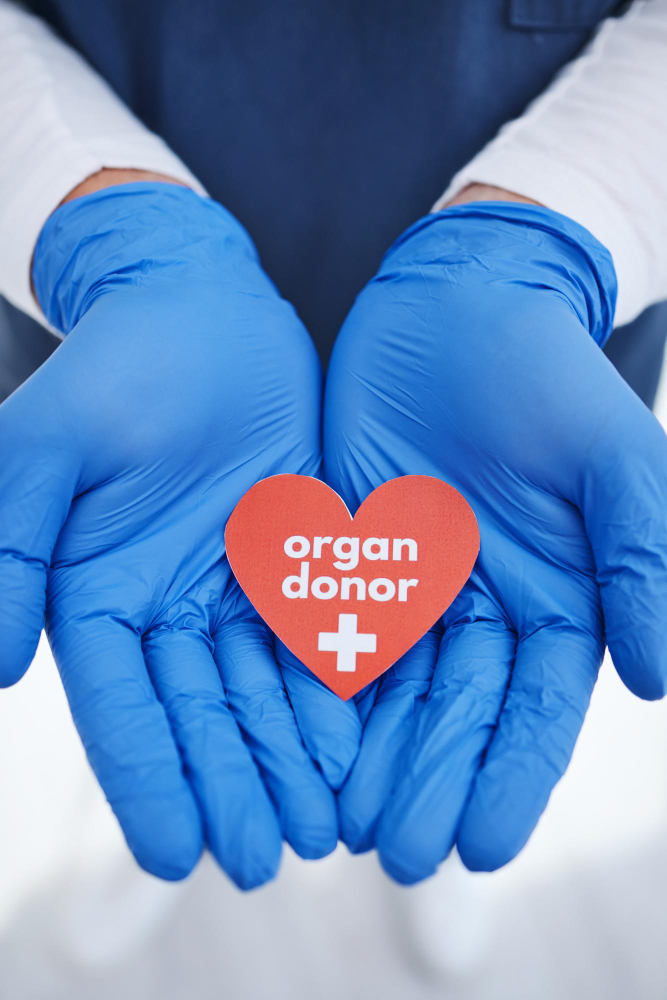
Organ donation awareness
- Community awareness campaigns and public outreach programmes
- School and college sessions to build understanding of donation among younger generations
- Corporate CSR initiatives to encourage workplace pledge drives
- Donor pledge registration drives at community events and within the hospital
Donor registration & counselling
- Assistance with organ donor registration and documentation
- Family counselling and guidance through the consent process — handled sensitively and without pressure
- Living donor evaluation and medical suitability assessment
- Psychological counselling for both donors and recipients, acknowledging that this is never just a medical process
Transplant coordination
- Recipient matching and allocation coordination
- Organ retrieval coordination — working within established protocols to ensure organs reach recipients in time
- Liaison with external hospitals and designated transplant centres
- Emergency transplant logistics support when time is critical
Medical evaluation & screening
- Blood group compatibility testing
- HLA (tissue) typing for compatibility assessment
- Infectious disease screening — to protect both donor and recipient
- Comprehensive organ function assessment before any transplant proceeds
Organ retrieval & preservation
- Organ harvesting procedures carried out by trained surgical teams
- Preservation solutions and cold storage to maintain organ viability
- Temperature-controlled transport coordination
- Rapid response retrieval teams for time-sensitive deceased donations
Transplant support services
- Pre-transplant workup and surgical planning
- Transplant surgical assistance
- Post-operative ICU care and close monitoring
- Guidance on immunosuppressive therapy to prevent rejection
Post-transplant care
- Regular follow-up consultations to monitor organ function and overall recovery
- Infection surveillance — recipients are at higher risk and need structured monitoring
- Rehabilitation support to help patients return to normal life
- Nutritional and lifestyle counselling tailored to life after transplant
Family support & grief care
- Emotional support for donor families — especially in the aftermath of a sudden loss
- Donor family recognition programmes that acknowledge the significance of their decision
Technology & Facilities
-
Diagnostics & Laboratory Ultrasound, CT, MRI, ECG, and echocardiography for pre-transplant imaging and cardiac clearance, alongside portable X-ray for bedside use. In-house laboratory handles blood grouping, crossmatch, HLA typing, PCR-based infectious disease screening, and organ function panels — everything needed for donor-recipient workup without sending samples out.
-
Organ Preservation Preservation solutions, cold storage units, temperature-monitored portable transport boxes, and organ perfusion systems to maintain viability from retrieval to implantation.
-
Surgical & Critical Care Modular operation theatres equipped for transplant procedures, supported by a fully equipped ICU with ventilators, multi-parameter monitors, infusion pumps, and defibrillators.
-
Coordination & Logistics Organ tracking software, donor management systems, telemedicine platforms for real-time coordination with transplant centres, emergency communication systems, and dedicated transport vehicles — ensuring time-critical logistics run without gaps.
FAQs
Who can donate organs?
Almost anyone can register as an organ donor — age alone does not disqualify someone. Medical suitability is determined at the time of donation based on the condition of each organ. Registering as a donor is a statement of intent; the clinical team and family make the final decisions at the time.
Does organ donation affect the treatment a patient receives in hospital?
No. The medical team's only responsibility is to the patient in front of them. Organ donation is only ever considered after every effort to save a life has been exhausted and brain death has been formally declared by an independent medical team.
What is brain death and how is it different from a coma?
Brain death is the complete and irreversible cessation of all brain function, including the brainstem. It is not a coma — a person in a coma may recover; brain death is permanent. Organs can only be retrieved from a deceased donor after brain death is declared through a formal, legally defined process.
Does my family have to consent even if I am a registered donor?
In practice, hospitals in India seek family consent before proceeding with donation. This is why conversations with family members about your wishes matter — your registration expresses your intent, but your family's understanding and agreement are what make donation possible.
What is living donation and is it safe?
Living donation typically involves donating one kidney or a portion of the liver to a family member or compatible recipient. Donors undergo thorough medical and psychological evaluation before being approved. Long-term outcomes for living kidney donors are generally very good, with the remaining kidney adapting over time.
How long can organs be preserved outside the body?
Preservation times vary by organ — hearts and lungs have a matter of hours, while kidneys can be preserved for longer. This is why transplant coordination and rapid logistics are so critical — every hour counts once retrieval begins.
Can a donor family change their mind after consent?
Yes. Consent can be withdrawn at any point before the procedure begins. Our counselling team ensures that families never feel pressured, and that decisions are made with full understanding and genuine choice.
How do I register as an organ donor?
You can register through the National Organ and Tissue Transplant Organisation (NOTTO) or through our hospital's donor registration assistance programme. Our team will guide you through the documentation and make sure your family is aware of your decision.